How I Build Websites That Generate Enquiries
❌ Why Most Websites Don’t Generate Enquiries
Most small business websites look fine.
But they don’t bring in business.
That’s because a website isn’t just about design — it’s about clarity, structure, and how easy it is for someone to take action.
📌 What usually goes wrong
In most cases, websites fail because:
- It’s not clear what the business actually does
- The message is vague or confusing
- Visitors don’t know what to do next
- The site looks good, but it isn’t built to convert
- It hasn’t been designed with Google or mobile users in mind
So people land on the site… and leave.
⚠️ The result
No enquiries.
No calls.
No new business.
Not because the business isn’t good — but because the website isn’t doing its job.
âś… The difference
A good website should act like a salesperson for your business.
It should:
- Clearly explain what you do
- Show how you help
- Build trust quickly
- Guide visitors to get in touch
That’s exactly what I focus on when building your website.
A website should make it easier for people to choose you — not harder.
7 Steps to a High-Converting Website
Step 1: Understanding Your Business
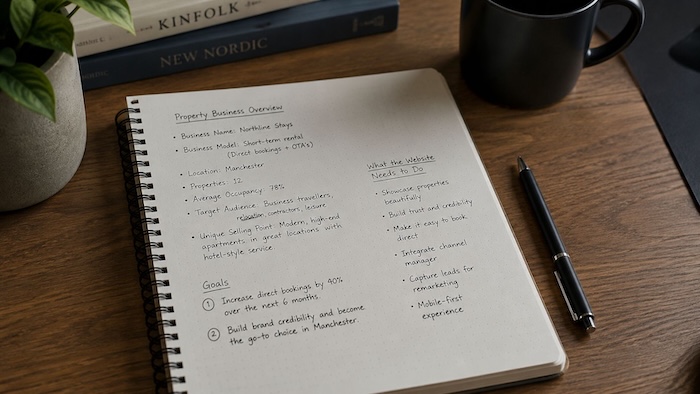
We start by understanding your business.
Before anything is built, I take time to understand what you do, who you help, and how you currently get customers.
Most people I work with say the same thing at this stage:
👉 “I don’t really know what to put on the website.”
That’s completely normal.
In fact, it’s one of the biggest reasons websites don’t work — because the message isn’t clear.
This is where I help.
I’ll guide you through simple questions to uncover:
- What problems you solve
- What results you deliver
- Why customers choose you
- What makes you different from your competitors
From there, I shape everything into clear, professional wording for your website.
You don’t need to know what to say — that’s my job.
The result is a website that speaks clearly to the right people and helps turn visitors into enquiries.
Step 2: Planning What Your Website Needs to Say
We turn your ideas into a clear, structured message.
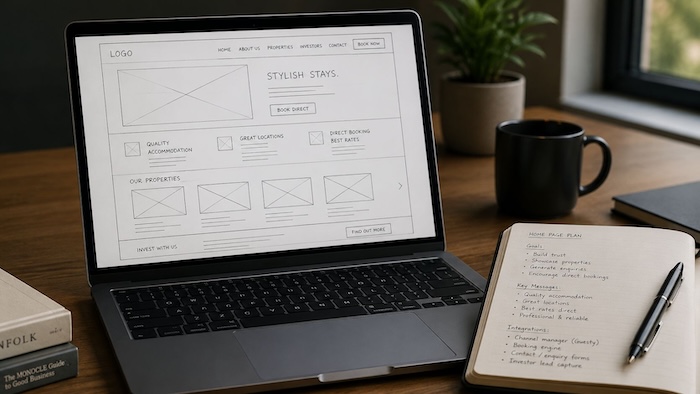
Once I understand your business, I map out exactly what your website needs to say — and in what order.
This is where most websites go wrong.
They might look good, but they confuse visitors.
People land on the page and think:
👉 “What do they actually do?”
👉 “Is this for me?”
👉 “What should I do next?”
When that happens, they leave.
I structure your website so that within a few seconds, a visitor can:
- Understand what you offer
- See how it helps them
- Know exactly what to do next
This includes:
- A clear headline at the top of the page
- Simple, logical sections that guide the reader
- Well-placed buttons and contact options
The goal is simple:
👉 No confusion
👉 No guesswork
👉 Just a clear path from visitor → enquiry
A great website makes it instantly clear what you offer, who it’s for, and how to take the next step.
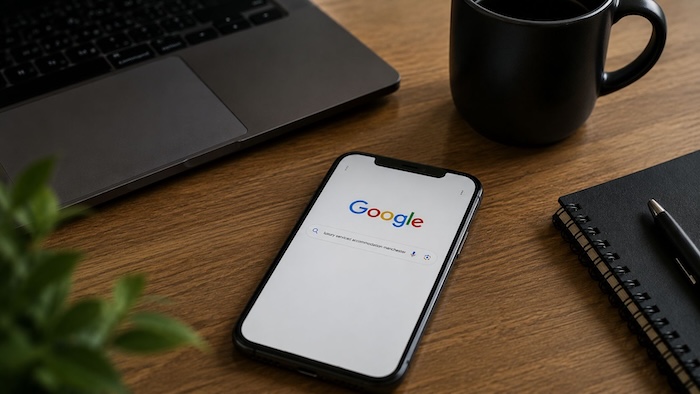
Step 3: Helping Your Website Get Found on Google
We focus on relevance - not tricks.
You may have heard of “SEO” (Search Engine Optimisation), but it’s often misunderstood.
Many people think it’s about adding keywords or trying to “game” Google.
It isn’t.
Google’s goal is simple:
👉 Show people the most helpful and relevant results
So instead of trying to trick the system, I build your website in a way that naturally aligns with how Google works.
📌 What this means for your website
I shape your content around:
- What your ideal customer is actually searching for
- How clearly your website explains your service
- How useful and relevant your content is
This helps Google understand:
👉 What you do
👉 Who you help
👉 When to show your website in search results
⚠️ Why most websites don’t rank
Many websites:
- Use vague or unclear wording
- Don’t match what people are searching for
- Focus on design, but ignore content.
As a result, Google doesn’t know where to place them — so they don’t show up
âś… How I approach it differently
I combine:
- Clear, simple language (that real people use)
- Thoughtful page structure
- Relevant content based on real searches
This gives your website the best chance of being found over time.
📌 Important to understand
SEO is not instant.
It’s something that builds over time — but when done properly, it can bring consistent enquiries without paying for ads.
Step 4: Design That Looks Professional (and Is Easy to Use)
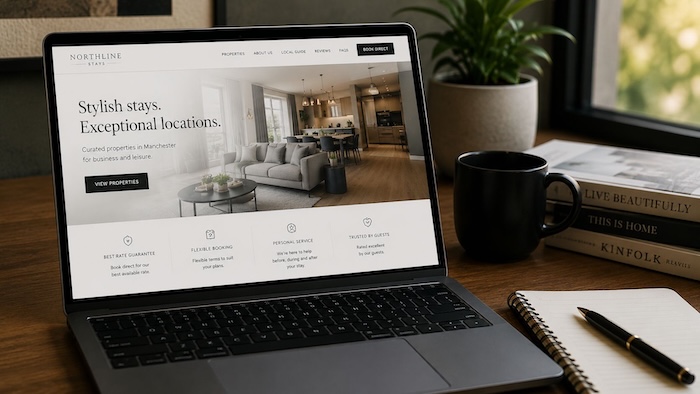
We design a website that builds trust — and feels effortless to use.
Your website needs to look trustworthy at first glance.
But design isn’t just about how it looks — it’s about how it feels to use.
If a website is even slightly confusing, slow, or frustrating, people leave.
⚠️ What most people don’t realise
A “nice-looking” website isn’t enough.
Visitors are asking themselves:
👉 “Can I quickly understand this?”
👉 “Is this easy to use?”
👉 “Do I trust this business?”
If the answer isn’t immediately clear, they move on.
âś… How I approach design
I create a clean, modern design that:
- Reflects your business professionally
- Is simple and easy to navigate
- Makes important information easy to find
- Works without friction or confusion
🎯 The goal
Your website should feel effortless, visitors should never have to “figure it out,” and everything should feel obvious and natural.
When that happens, people stay longer — and are far more likely to get in touch.
Step 5: Mobile-Friendly (Where Most People Will See You)
Your website is designed for mobile first — not as an afterthought.
Most people will visit your website on their phone — often 60–80% of your visitors.
That means your website isn’t just a desktop site that “also works” on mobile.
It needs to be designed specifically for it.
📱 What’s different on mobile?
On a phone:
- The screen is smaller
- People scroll quickly
- Attention is shorter
- Buttons need to be easy to tap
A website that looks fine on desktop can feel awkward or frustrating on mobile if it’s not designed properly.
⚠️ What happens when mobile is poor
If your site is:
- Hard to read
- Difficult to navigate
- Slow or clunky
People leave within seconds.
âś… How I approach mobile design
I design your website so it:
- Looks clean and clear on a phone
- Is easy to scroll and navigate
- Has well-placed buttons and contact options
- Loads quickly and feels smooth
🎯 The goal
👉 Your website should feel natural to use on a phone
👉 Visitors should instantly understand what to do
👉 Getting in touch should be effortless
Because for most of your customers, this is your website.
Step 6: Built to Turn Visitors Into Enquiries
We make it easy for people to contact you.
Your website isn’t just there to look nice — it should generate enquiries.
This isn’t a new idea.
Even before the internet, good businesses knew:
👉 Make it easy for people to contact you
You made your phone number memorable.
You answered calls quickly and professionally.
You removed anything that got in the way of a customer reaching you.
The same principle applies to your website.
⚠️ What happens on most websites
Visitors land on the page… and then:
👉 They’re not sure what to do next
👉 They can’t quickly find contact details
👉 There’s no clear next step
So they leave.
âś… How I structure your website
I make it easy and obvious for someone to contact you:
- Your phone number is clearly visible
- Your email is easy to find
- Buttons can start a call or email instantly
- Optional WhatsApp contact
- Simple, quick enquiry forms
📌 What is a “Call to Action” (CTA)?
A Call to Action (CTA) is simply telling the visitor what to do next.
For example:
- “Call now”
- “Get a quote”
- “Book a consultation”
Without this, visitors are left guessing.
🎯 The goal
👉 No friction
👉 No confusion
👉 No missed opportunities
Step 7: Testing With Real People
We test your website to make sure it’s clear and easy to use
Before your website is finished, I test how real people use it — without giving them any instructions.
This is important, because what seems obvious to you (or to me) isn’t always obvious to a first-time visitor.
🚨 What this reveals
When someone uses your website for the first time, it quickly shows:
👉 What’s clear
👉 What’s confusing
👉 Where people hesitate or get stuck
Even small points of friction can lead to lost enquiries.
âś… What I check and improve
- How easily someone understands what you do
- Whether it’s obvious how to contact you
- That all buttons and links work correctly
- How the site performs on desktop, tablet, and mobile
🎯 The goal
👉 A website that feels simple and intuitive
👉 No confusion or hesitation
👉 A smooth path from visitor to enquiry
Small improvements here can make a big difference in results.
Don’t have a website yet—or not getting enquiries from the one you have?”
Let’s build (or fix) something that actually works for your business.
Fill in the contact form, and we’ll get back to you as soon as possible.